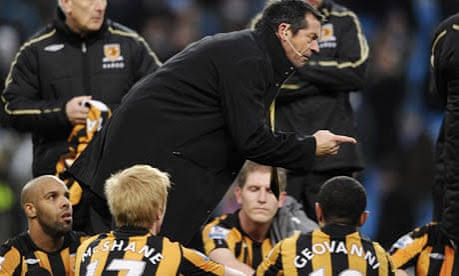
Betting against elite football institutions during temporary performance slumps requires overcoming the psychological weight of public brand perception. In the 2008/2009 English Premier League campaign, traditional heavyweights like Chelsea, Liverpool, and Arsenal periodically experienced form dips driven by managerial friction, fixture congestion, and tactical staleness. Bookmakers frequently delayed adjusting their core pricing models because recreational volume continued backing these marquee names on name recognition alone. Sharp handicappers who monitored underlying performance decay rather than surface results successfully faded these slumping giants, capturing significant value on underdog and draw positions.
Identifying the Lag Between Actual Performance Decay and Market Price Adjustments
The core inefficiency when fading a slumping elite team lies in the inherent delay of bookmaker price adjustments. Oddsmakers operate under the constraint that public betting weight heavily favors top-tier clubs, causing them to maintain short odds on powerhouses long after underlying metrics have turned negative. When a dominant side begins struggling with passing accuracy, shot creation, or defensive transitions, the market often treats the slump as short-term variance rather than structural decline.
This pricing lag creates an extended window where betting against the slumping giant carries positive expected value. Punters who track objective performance indicators—such as declining touches inside the opposition penalty area or increasing defensive errors—can spot a fading contender weeks before mainstream pundits acknowledge their crisis. Capitalizing on this discrepancy allows disciplined bettors to secure generous plus-money odds or favorable handicap cushions before the market finally corrects its valuation.
Mechanical Indicators of Elite Performance Decay
The transition from minor dip in form to a systemic elite slump follows a predictable pattern of statistical degradation. Recognizing these internal symptoms enables punters to distinguish true tactical decay from temporary bad luck:
- Progressive passing distance in the middle third drops sharply as central playmakers begin holding the ball too long under pressure.
- Defensive transition recovery times increase, leading to a higher frequency of tactical fouls committed outside the penalty arc.
- Set-piece defensive organization degrades due to declining communication and mental fatigue among marking assignments.
These mechanical failures directly undermine a team’s ability to dominate matches or secure multi-goal margins. Incorporating these performance decay indicators into pre-match evaluations ensures that bets against slumping giants are driven by hard metrics rather than emotional frustration.
Scolari’s Chelsea Slump and the Dangers of Tactical Disconnection
Chelsea’s turbulent first half of the 2008/09 campaign under Luiz Felipe Scolari provides a prime historical example of how an elite squad’s form can deteriorate beneath a deceptively stable table position. Despite opening the season brightly, Scolari’s tactical rigidity and friction with senior players led to a noticeable stagnation in ball movement and a loss of defensive intensity. Opponents quickly figured out how to stifle Chelsea by packing the central corridor, yet bookmakers continued pricing them as dominant home favorites against mid-table visitors.
Fading Chelsea during this mid-winter wobble yielded consistent profits, particularly in matches where they were expected to cover heavy spreads against disciplined low blocks. The dressing-room disconnect eroded their work rate, preventing them from sustaining the relentless pressure required to break down stubborn defenses. Bettors who recognized that Scolari’s tactical blueprint had grown stale successfully laid negative handicaps and backed well-organized opponents to secure crucial points at Stamford Bridge.
Liverpool’s Winter Draw Loop: When Elite Possession Fails to Convert
Rafael Benítez’s Liverpool side encountered a severe form stutter during January and February 2009, characterized by an frustrating sequence of domestic draws against relegation-threatened opponents. While Liverpool maintained an extraordinary overall defensive record, their offensive engine sputtered due to an over-reliance on Steven Gerrard and Fernando Torres, the latter of whom missed extended periods through injury. Opposing managers deployed deep, crowded defensive blocks at Anfield, daring Liverpool to break them down without the necessary creative width.
Despite these clear offensive limitations, the betting market consistently priced Liverpool as heavy -1.5 favorites against visiting units designed entirely for containment. Fading Liverpool on handicap markets during this stretch—or actively backing the draw in match-result pools—became a highly profitable strategy. The team’s inability to convert sterile possession into high-danger scoring opportunities meant they repeatedly failed to justify their inflated odds, punishing recreational accumulators who refused to account for their temporary attacking bluntness.
Whenever an analyst studies how elite market pricing remains artificially inflated during prolonged offensive slumps, tracking historical odds movement within a specialized online betting service like ทางเข้าสํารอง ufabet reveals the extent of public over-attachment. The persistent influx of casual money onto household names ensures that value on opposing sides remains protected long after underlying vulnerabilities become apparent.
Arsenal’s Mid-Season Fragility and the Cost of Defensive Youth
Arsène Wenger’s Arsenal suffered a profound form crisis in late 2008, dropping out of the title race entirely following a toxic combination of injuries, defensive errors, and captaincy controversies. The squad lacked experienced leadership in the center of the pitch, leading to catastrophic collapses in matches they should have comfortably controlled. Against physical, direct opponents like Stoke City and Aston Villa, Arsenal’s youthful lineup wilted under aerial pressure and aggressive high pressing.
The market, however, was slow to strip Arsenal of their elite status pricing, frequently installing them as short away favorites even when their structural integrity was deeply compromised. Fading Arsenal during this vulnerable phase by backing physical home teams on draw-no-bet or positive handicap lines proved exceptionally lucrative. Opponents targeted Arsenal’s soft defensive core with direct long balls and set pieces, exposing the reality that raw technical talent cannot compensate for a lack of competitive resilience during a slump.
The analytical table below illustrates how different elite clubs exhibited distinct slump profiles and vulnerability triggers during the 2008/09 campaign:
| Slumping Club | Primary Catalyst of Form Decay | Market Pricing Behavior | Optimal Fading Strategy | Vulnerability Window |
| Chelsea (Scolari era) | Managerial friction and tactical predictability | Stubbornly short odds due to star roster | Back physical low-block visitors on +1.0/+1.25 | Mid-winter fixture congestion |
| Liverpool | Striker injuries and defensive low-block stagnation | Heavy -1.5 favorite pricing against compact sides | Back the draw or take positive Asian Handicap | Winter stretch (Jan–Feb stalemates) |
| Arsenal | Squad youth, defensive errors, and physical bullying | Retained elite away favoritism despite soft core | Back physical home teams with aerial dominance | Autumn turmoil (Nov–Dec crisis) |
| Aston Villa (Spring) | Severe physical fatigue and zero squad rotation | Slow downward adjustment by oddsmakers | Full fade on Asian Handicap / Back opponents | Spring collapse (Feb–May winless run) |
The comparative data highlights that elite slumps are rarely caused by a single factor, but rather by the intersection of physical exhaustion, tactical inflexibility, and psychological fatigue. Fading these teams required matching the specific nature of their slump against the tactical strengths of their opponents.
Recognizing that Arsenal’s slump was rooted in physical bullying allowed sharp bettors to target robust, direct opponents, whereas fading Liverpool’s offensive slump required focusing on low-scoring draw markets rather than outright upsets.
The Psychology of Public Over-Attachment and Market Correction
Fading a slumping giant requires navigating the psychological barrier of betting against famous clubs backed by millions of casual fans. Recreational bettors suffer from confirmation bias, remembering past glories and exceptional winning streaks while dismissing current performance decay as a temporary aberration. This emotional attachment distorts the betting pool, creating artificial value on the opposing side that sharp, data-driven handicappers can systematically exploit.
When a historically dominant team enters a slump, the sports media often amplifies narratives of an imminent bounce-back, reinforcing public belief and keeping market prices inflated. Analytical bettors must ignore these media storylines to focus exclusively on match data, expected goals trends, and tactical execution. Fading a marquee name is rarely comfortable in the moment, but objective detachment from brand prestige is what separates long-term profitable bettors from recreational participants.
Spotting the Ultimate Rebound: When to Stop Fading a Slump
A critical skill in fading slumping elite teams is identifying the precise inflection point where the slump ends and market correction overshoots in the opposite direction. If bettors continue fading a powerhouse long after structural changes have occurred—such as a managerial sacking, tactical reinvention, or key personnel returning from injury—they risk walking into a severe value trap. When oddsmakers finally over-adjust and price a recovering giant at inflated odds, the correct play often flips back to backing them.
For example, Guus Hiddink’s arrival at Chelsea in February 2009 immediately arrested their mid-season slump, restoring tactical balance and defensive resilience. Punters who continued blindly fading Chelsea based on their winter form quickly suffered heavy losses as the squad surged back to elite performance levels. Successful betting demands continuous evaluation rather than static assumptions, ensuring that tactical interventions are factored into pricing models immediately.
Whenever observers track how rapidly market sentiment shifts following a high-profile managerial replacement across an interactive betting destination casino, noting the immediate compression of future odds highlights how quickly the market corrects its pricing once structural change is confirmed. Recognizing this tipping point prevents bettors from holding obsolete positions against a revitalized powerhouse.
Synthesizing Value: Building a Framework to Oppose Failing Contenders
Successfully opposing struggling giants across a demanding 38-game schedule demands a disciplined, multi-step analytical framework. Bettors must verify that the target club’s form decay is systemic, that the upcoming opponent possesses the specific tactical tools to exploit their weaknesses, and that public market volume has failed to account for their decline. Executing this strategy systematically turns public bias into an enduring financial advantage.
A rigorous framework for fading slumping contenders relies on three non-negotiable verification steps:
- Confirming that the target club has posted declining underlying performance metrics across a minimum of four consecutive fixtures.
- Identifying that the opposing team’s tactical strengths directly target the slumping giant’s primary structural vulnerability.
- Verifying that closing market odds retain an unadjusted premium based purely on the target club’s historical brand reputation.
Fulfilling these criteria ensures that capital is deployed only when statistical reality and market pricing diverge significantly. Consistently executing this approach allows analytical bettors to extract exceptional long-term value from the inevitable vulnerabilities of top-tier football.
Summary
Fading slumping elite teams in the 2008/09 Premier League proved that betting profitability relies on objective performance analysis rather than emotional attachment to brand prestige. Whether it was Chelsea’s tactical disconnection under Scolari, Liverpool’s winter draw loop, or Arsenal’s physical vulnerability, temporary form dips created sustained pricing inefficiencies. Bookmakers maintained short odds on these fading giants to accommodate heavy public volume, opening valuable opportunities for bettors willing to back disciplined opponents. Ultimately, successful wagering against elite slumps required recognizing performance decay early, exploiting market lag, and knowing precisely when a team’s recovery warranted stepping away from the fade.
Leave a Reply